

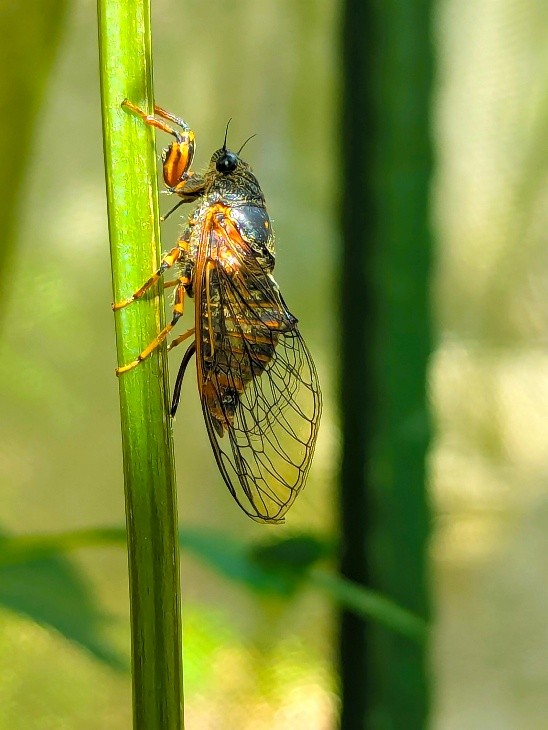
The New Forest cicada (Cicadetta montana) is the UK’s only native cicada species. Unfortunately, it is now presumed extinct in Britain, with the last confirmed sightings in the 1990s. Despite extensive surveys between 1996 and 2014, the species has remained undetected. Changes in habitat management are thought to have contributed to its decline, and without intervention, the New Forest Cicada could be lost from our native wildlife for good.
The Species Recovery Trust and Paultons Park are working together to give this cryptic species a second chance.
A life hidden beneath the soil
Cicadas are extremely difficult to monitor because they spend the vast majority of their lives underground. Adult New Forest cicadas live for just two to four weeks, during which time, they mate, and females will lay their eggs inside the stems of vegetation, including bracken and small trees.
After approximately 50–125 days, the eggs hatch. These tiny, newly emerged nymphs will make their way into the soil, where they will feed on plant roots and develop underground for around four to ten years before emerging as adults.
This long and fascinating life cycle presents a considerable challenge for us. How can we protect and monitor this species when it spends years hidden beneath the surface?
The project so far
In 2025, 11 female cicadas were brought over from France and housed in specially designed enclosures at Paultons Park. Two females successfully laid hundreds of eggs, marking an important milestone for the recovery programme.
Once the eggs hatched, the tiny nymphs would have needed to reach the soil to begin their long underground development. If successful, they will remain beneath the surface of the soil eating roots for several years before finally emerging as adults.
In 2026, the Species Recovery Trust returned to France where they collected some bracken stems containing cicada eggs. These were brought back to Paultons Park, where we planted them in our enclosures and began waiting to see whether the next generation would hatch.
And in August, we had not one, but two exciting developments.
Listening for life beneath the soil
We welcomed Dr Ella Browning and her team of bioacoustics specialists from the Leverhulme Centre for Nature Recovery, University of Oxford, to investigate what might be happening beneath the surface of our cicada enclosures.
Using highly sensitive probes inserted into the soil, the team recorded underground sounds in enclosures where cicadas had laid eggs in 2025. They also sampled control enclosures that had never housed cicadas, allowing them to compare the recordings.
A distinctive sound was detected in the cicada enclosures that was not present in the control enclosures.
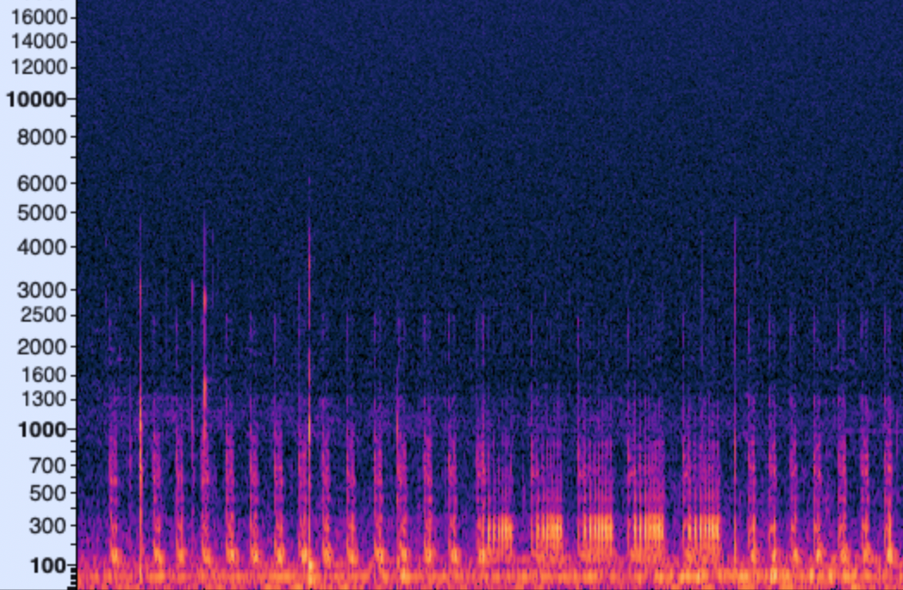
Although both further investigation and long-term monitoring are needed to establish the source of these sounds, the findings are extremely encouraging. It suggests the possibility that the nymphs from 2025 may have successfully burrowed into the soil and could be alive and developing.
This also creates an exciting opportunity to explore whether bioacoustics could help us monitor a species whose underground life cycle makes traditional survey and monitoring methods a challenge.
A rare glimpse of a newly hatched cicada
Our second exciting development came with the discovery of three newly hatched cicada nymphs found with the bracken stems collected in France earlier in 2026.
Unfortunately, all three had died before successfully reaching the soil. While this was disappointing, their discovery provided a rare opportunity to study this species at an incredibly early stage of its development.
The nymphs were taken to Bournemouth University, where we captured what are believed to be the first known photographs of the New Forest cicada at this stage of its life cycle. We also used this opportunity to take measurements to document their anatomy and establish a baseline for future research.
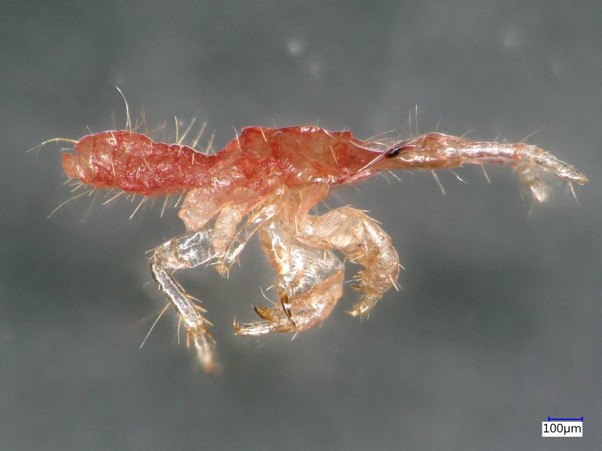
These tiny nymphs may be only a few millimetres long, but they represent a massive step forward in our understanding of this cryptic species. Documenting their morphology will help us build scientific knowledge that is needed to support our monitoring and hopeful reintroduction efforts.
What happens next?
We now have evidence that eggs can be hatched in our enclosures, newly hatched nymphs have been documented from the 2026 collection, and underground recordings have revealed sounds that warrant further investigation in the enclosures used in 2025.
We cannot confirm yet that living nymphs from either year are successfully developing underground, but these findings have us optimistic and have provided some opportunities for us to investigate that could help us monitor the nymphs development.
The ultimate goal is to establish a self-sustaining population of New Forest cicadas back in their native habitat. Achieving this will require continued research, improved monitoring techniques, extensive habitat surveys and the development of a viable captive rearing programme. We hope to reintroduce these cicadas into carefully selected sites in the New Forest, giving the species the best possible chance of recovery.
There is still a long way to go. The cicada’s long life cycle means we have to be patient and that meaningful progress will take years rather than months. However, every egg, every nymph and every new piece of scientific evidence brings us a step closer.
One day, we hope that we will hear the distinctive song of the New Forest cicada in its native range again.


